
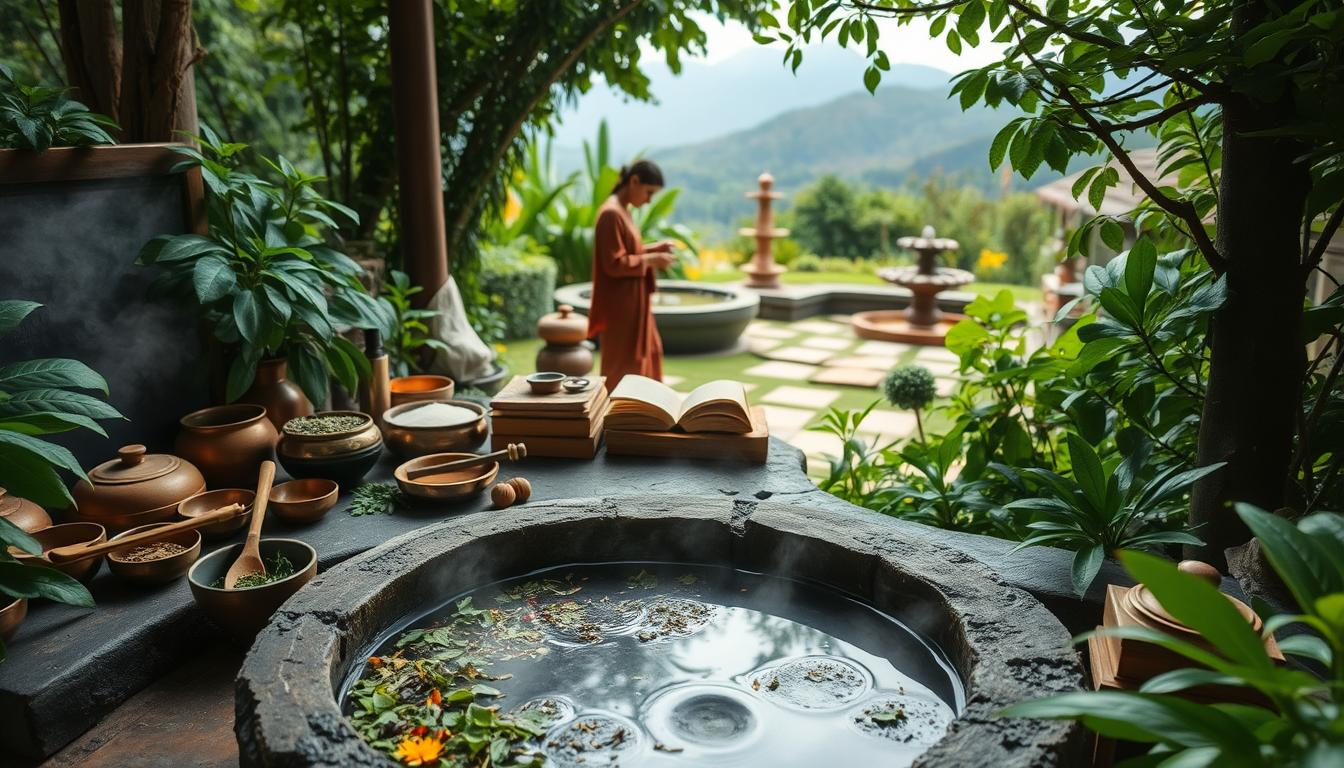
Can ancient healing traditions really help us navigate the stresses of contemporary life? In today’s fast-paced world, finding balance and wellness can seem like an insurmountable task.
Ayurvedic medicine offers a holistic approach, providing practical solutions for modern wellness challenges. By integrating ancient healing traditions into our daily routines, we can cultivate a more harmonious and healthy lifestyle.
This ancient practice is not just about treating ailments but about preventing them by understanding our unique constitutions and promoting overall well-being.
Key Takeaways
Table of Contents
- Ayurvedic principles can be applied to modern life for better wellness.
- Ancient healing traditions offer holistic solutions for contemporary challenges.
- Understanding one’s constitution is key to Ayurvedic practice.
- Ayurvedic medicine focuses on prevention as well as treatment.
- Integrating Ayurveda into daily life can lead to a more balanced lifestyle.
Understanding the Foundations of Ayurveda
To embrace ayurvedic principles for modern living, one must first grasp its fundamental concepts. Ayurveda is an ancient system that views the individual as a whole, encompassing physical, mental, and spiritual well-being.
The Three Doshas: Vata, Pitta, and Kapha
Ayurveda is centered around the concept of the three doshas: Vata, Pitta, and Kapha. These elements govern all bodily functions and are present in every individual, albeit in varying proportions. Vata is associated with movement and communication, Pitta with metabolism and energy, and Kapha with structure and lubrication.
| Dosha | Characteristics | Functions |
|---|---|---|
| Vata | Air and Ether | Movement, Communication |
| Pitta | Fire and Water | Metabolism, Energy |
| Kapha | Earth and Water | Structure, Lubrication |
How to Determine Your Unique Constitution
Understanding one’s unique constitutional type is crucial for applying Ayurvedic principles effectively. This involves assessing the individual’s physical and personality traits to determine their predominant dosha(s).
Simple Self-Assessment Techniques
Begin by observing your body type, energy levels, and tendencies. Are you slender and active (Vata)? Muscular and ambitious (Pitta)? Or calm and steady (Kapha)?
Recognizing Imbalances in Your Body
Imbalances can manifest as physical or emotional symptoms. For instance, a Vata imbalance might cause anxiety or dry skin, while a Pitta imbalance could lead to anger or inflammation. Recognizing these signs is the first step towards restoration.
By understanding the foundations of Ayurveda and determining your unique constitution, you can harness the power of holistic health solutions tailored to your needs.
Ayurvedic Medicine for Modern Lifestyles: Practical Applications
As modern lifestyles become increasingly demanding, Ayurvedic medicine offers practical solutions for achieving balance and well-being. The ancient practices of Ayurveda can be adapted to address the unique challenges of contemporary life, providing a holistic approach to health.
Addressing Digital Age Imbalances
The digital age has brought about significant changes in our daily lives, often leading to imbalances that can affect our overall health. Ayurvedic practices can help mitigate these effects.
Solutions for Sedentary Work Habits
Many modern jobs involve long hours of sitting, which can lead to various health issues. Ayurvedic lifestyle practices such as regular stretching, taking short walks, and practicing yoga can help counteract the negative effects of sedentary work habits.
Counteracting Information Overload
The constant influx of information in the digital age can be overwhelming. Techniques like meditation and mindfulness, rooted in Ayurvedic medicine, can help manage information overload and reduce natural remedies for stress are essential.
Adapting Ancient Practices for Contemporary Needs
Ayurvedic medicine is not just about following traditional practices; it’s about adapting them to suit modern needs. By understanding the principles of Ayurveda, individuals can create personalized routines that incorporate natural remedies for stress and other health-promoting practices.

For example, adjusting daily routines to include activities that balance one’s dosha can significantly improve overall well-being. This might involve waking up earlier, practicing specific yoga poses, or incorporating certain herbs into one’s diet.
Establishing an Ayurvedic Daily Routine
Establishing a daily routine based on Ayurveda can bring balance and harmony to modern lifestyles. By incorporating simple yet effective practices into your morning and evening routines, you can enhance your overall well-being and vitality.
Morning Rituals for Balance and Energy
Starting your day with Ayurvedic morning rituals can set a positive tone for the rest of the day. These practices help to stimulate digestion, boost energy, and prepare the body for the day ahead.
Tongue Scraping and Oil Pulling
Tongue scraping removes toxins and bacteria from the tongue, promoting oral health and fresh breath. Oil pulling, using oils like coconut or sesame, helps to detoxify the mouth and reduce inflammation. These practices together can significantly improve oral hygiene.
Abhyanga (Self-Massage) Techniques
Abhyanga involves gently massaging the body with warm oil to nourish the skin, calm the nervous system, and improve circulation. Regular self-massage can help to reduce stress and promote a sense of relaxation and well-being.
Evening Practices for Restorative Sleep
As the day comes to a close, incorporating Ayurvedic evening practices can help to calm the mind, relax the body, and prepare for restorative sleep. A consistent evening routine signals to the body that it’s time to wind down.
Digital Detox Strategies
Implementing a digital detox in the evening can significantly improve sleep quality. This involves avoiding screens for at least an hour before bedtime and engaging in relaxing activities instead.
Calming Herbal Preparations
Herbal teas, such as chamomile or ashwagandha, can be used to calm the nervous system and promote relaxation. These ayurvedic herbs for wellness help to soothe the mind and body, making it easier to fall into a deep and restorative sleep.
Implementing Ayurvedic Nutrition in a Fast-Paced World
Ayurvedic nutrition offers a holistic approach to eating that can be adapted to even the busiest lifestyles. By understanding the principles of Ayurveda, individuals can make informed choices about their diet, leading to improved overall health and well-being.
Quick and Balanced Meals for Each Dosha
Preparing meals according to one’s dosha can be straightforward, even on a tight schedule. For Vata types, warm, nourishing foods like soups and stews are ideal. Pitta individuals benefit from cooling foods such as salads and yogurt-based dishes. Meanwhile, Kapha types should focus on light, warming meals that include plenty of vegetables and lean proteins.

Mindful Eating Practices for Busy Schedules
Mindful eating is crucial for digesting food properly and enjoying meals. Even in a fast-paced world, there are simple practices that can be adopted.
The 5-Minute Pre-Meal Ritual
Before eating, take five minutes to relax and focus on your meal. This can involve deep breathing, a short meditation, or simply appreciating the food in front of you. Such a ritual can significantly enhance digestion and the overall dining experience.
Spice Combinations for Better Digestion
Using the right spice combinations can aid digestion. For example, combining ginger, cumin, and coriander can help Pitta types. For Vata and Kapha, spices like turmeric and black pepper can be beneficial. Experimenting with different spice blends can lead to better digestive health and more flavorful meals.
By incorporating these ayurvedic wellness tips and holistic health solutions into daily life, individuals can experience the benefits of Ayurvedic nutrition even in a fast-paced world.
Natural Remedies for Common Modern Ailments
As we navigate the challenges of modern life, Ayurvedic medicine provides a wealth of natural solutions for common health issues. Modern lifestyles are often accompanied by stress, anxiety, and technology-related problems, but Ayurveda offers a range of remedies to help alleviate these conditions.
Stress and Anxiety Management
Stress and anxiety are prevalent in today’s fast-paced world. Ayurveda offers several natural approaches to manage these conditions effectively.
Adaptogenic Herbs for Resilience
Adaptogenic herbs like ashwagandha and tulsi are known for their ability to enhance resilience to stress. These herbs help the body adapt to changing circumstances, promoting balance and well-being. Incorporating them into your daily routine can be as simple as consuming them as teas or supplements.
Breathing Techniques for Immediate Relief
Breathing techniques, such as pranayama, offer immediate relief from stress and anxiety. Techniques like alternate nostril breathing can calm the mind and balance the nervous system, providing a quick and effective way to manage stress.
Solutions for Technology-Related Issues
Prolonged screen time and the constant connectivity of modern technology can lead to eye strain and disrupted sleep patterns. Ayurveda provides effective solutions for these issues.
Ayurvedic Eye Care for Screen Time
Ayurvedic eye care practices, including exercises and herbal remedies, can help mitigate the effects of prolonged screen time. Techniques such as palming and eye rotations can reduce strain, while herbs like triphala can support eye health.
Herbs and Practices for Better Sleep
Herbs like chamomile and brahmi, along with practices such as meditation and a consistent sleep schedule, can improve sleep quality. These Ayurvedic remedies help regulate the body’s internal clock and promote restful sleep, countering the effects of technology-related sleep disturbances.
Movement and Mindfulness: Integrating Ayurvedic Exercise
Embracing Ayurvedic exercise can lead to a more balanced and mindful lifestyle. Ayurvedic principles offer a unique approach to physical activity, tailored to individual constitutions.
Dosha-Specific Movement Practices
Ayurvedic exercise is most effective when tailored to one’s dosha. Here are some dosha-specific practices:
- Vata-balancing routines focus on grounding and calming movements.
- Pitta-cooling activities emphasize gentle, flowing exercises.
- Kapha-stimulating exercises involve more dynamic and challenging movements.
Vata-Balancing Routines
Vata types benefit from gentle, slow movements like yoga and tai chi, which help calm the nervous system.
Pitta-Cooling Activities
Pitta individuals benefit from swimming and water-based exercises, which help cool and calm their nature.
Kapha-Stimulating Exercises
Kapha types are invigorated by more vigorous activities like aerobics and strength training, helping to overcome inertia.
Micro-Practices for the Office and Home
Incorporating micro-practices into daily routines can significantly enhance well-being. Examples include:
- 2-minute desk stretches to improve circulation and reduce stiffness.
- Mindful transitions between activities to maintain a calm and focused state.
2-Minute Desk Stretches
Simple stretches like neck rolls and shoulder shrugs can be done at your desk to reduce tension.
Mindful Transitions Between Activities
Taking a few deep breaths and setting an intention before switching tasks can help maintain mindfulness throughout the day.

Conclusion: Creating Your Sustainable Ayurvedic Lifestyle
Embracing Ayurveda can be a transformative journey towards achieving balance and harmony in your life. By understanding your unique constitution and incorporating Ayurvedic principles into your daily routine, you can experience profound improvements in your overall well-being.
Start by integrating simple yet effective Ayurvedic wellness tips into your daily life, such as establishing a consistent morning routine, practicing mindful eating, and engaging in dosha-specific movement practices. These small changes can have a significant impact on your energy levels and overall health.
As you continue on your Ayurvedic path, remember that balance and harmony with ayurveda is a journey, not a destination. Be patient, stay committed, and allow the ancient wisdom of Ayurveda to guide you towards a more balanced, harmonious, and fulfilling life.
FAQ
What is Ayurvedic medicine, and how can it help with modern lifestyle challenges?
Ayurvedic medicine is an ancient practice that offers practical solutions for contemporary wellness challenges, providing a holistic approach to health and wellness that can help mitigate the effects of stress, anxiety, and other modern lifestyle issues.
How do I determine my unique Ayurvedic constitution, and why is it important?
You can determine your unique constitution by using simple self-assessment techniques, such as evaluating your physical characteristics, personality traits, and tendencies, which will help you understand your strengths and weaknesses and guide you in making lifestyle choices that promote balance and harmony.
What are some practical ways to incorporate Ayurvedic principles into my daily routine?
You can start by establishing a daily routine that includes morning rituals like tongue scraping and oil pulling, and evening practices like digital detox and calming herbal preparations, which can help promote balance, energy, and restorative sleep.
How can Ayurvedic nutrition help with busy schedules and fast-paced lifestyles?
Ayurvedic nutrition offers guidance on quick and balanced meals tailored to individual doshas, as well as mindful eating practices that can be adapted to busy schedules, helping you maintain a healthy and balanced diet even in the midst of a hectic lifestyle.
What are some natural remedies for common modern ailments like stress and anxiety?
Ayurvedic medicine offers a range of natural remedies, including adaptogenic herbs, breathing techniques, and Ayurvedic eye care practices, that can help manage stress and anxiety, promoting resilience and overall well-being.
How can I integrate Ayurvedic exercise and mindfulness practices into my daily life?
You can start by incorporating dosha-specific movement practices, such as Vata-balancing routines, Pitta-cooling activities, and Kapha-stimulating exercises, as well as micro-practices like desk stretches and mindful transitions, which can help promote balance and overall well-being.
Are there any simple Ayurvedic lifestyle practices I can start with?
Yes, you can start with simple practices like Abhyanga (self-massage), tongue scraping, and oil pulling, which can help promote relaxation, balance, and overall well-being, and are easy to incorporate into your daily routine.